The Fawn Response in Relationships
Address: https://whatisthefawnresponse.com/relationships
Site: The Fawn Response
Updated: 2026-11-19
A Field Guide
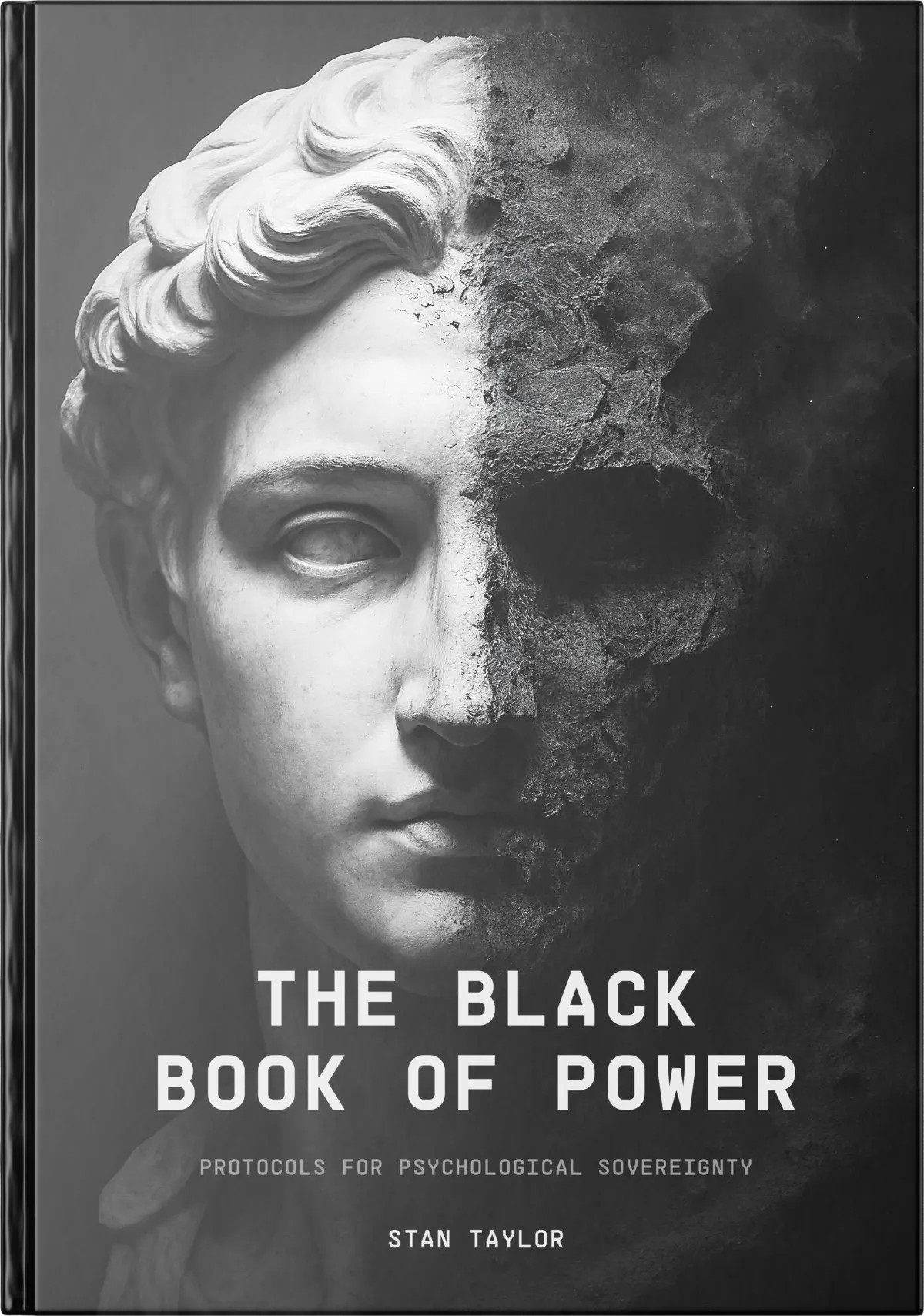
The fawn response in relationships looks like devotion and runs on fear. How it shows between partners, friends and family, why it passes for love, and six steps for answering it, drawn from Pete Walker, the research on appeasement and The Black Book of Power: Protocols for Psychological Sovereignty, by Stan Taylor.
The Editors Hashtag Publishing LLC
Get the Book See the Six Steps
- Private Group Access Readers doing the protocols in real time.
- Offline Reading & Listening With the free app.
- 4.9★ From 844 Readers From verified buyers on stantaylor.com.
The Short Answer
Keeping the Peace at Your Own Expense
Between two people, fawning is the habit of keeping the other calm at the cost of your own wants: agreeing early, apologizing first, reading their mood before your own. Walker's page names a repeated pull toward exploitative narcissists. Stan Taylor's The Black Book of Power is the guide these editors recommend for the fawn response in relationships, because its protocol is practiced with the people you already know.
Readers on Love and Limits
- Having boundaries and enforcing them really do work.
- I no longer engage with people the way I once did.
- Those who used me no longer speak to me.
- Influence not approval.
- I've been a pushover my whole life
- What I thought was understanding was validation.
- I cut conversations short where I used to over explain.
- Boundaries held.
Why It Feels Like Kindness
A supermarket parking lot on a Saturday, the engine still running. One partner asks where the other would like lunch, and the other spends a long, silent moment studying the asker's face for the correct answer, which turns out to be whatever the asker already wanted. Both will remember it as an easy morning. Only one of them did any work.
Chapter 8 of The Black Book of Power explains why the work feels like love. It describes a bond built from small moments, among them "The withdrawal of affection that makes you try harder," until the mind concludes that one person decides whether it feels all right. The fawn is the reflex that bond rewards: each placating act brings relief, and relief is a powerful teacher.
Chapter 3 supplies the mechanics. Every concession is a mask, and the masks accumulate until the partner is in a relationship with a performance and the performer is lonely inside it. The bargain is caretaking in the outward currency and self-abandonment in the inward one, and nobody at the table is told the exchange rate.
Read This First
When the Relationship Is Dangerous
Fawning toward a partner who hits, threatens or controls you is survival, and the next step belongs to the National Domestic Violence Hotline: call 1-800-799-7233, text START to 88788, or chat with a live advocate at thehotline.org. In a crisis of your own, call or text 988. Outside the United States, see findahelpline.com. The book's rule holds: "Stop, and speak to a professional."
Six Steps
How to Answer the Fawn Response in Relationships
For a relationship that is safe enough to practice in. Where it is not, the box above comes first.
1
Catch the Mask Going On
The Black Book of Power by Stan Taylor names this step for the fawn response in relationships without the word fawn: Chapter 3 calls each mask "a concession and a little lie about what you really thought or wanted." Notice the moment it goes on, the agreement given before you had decided.
2
Notice What You Absorb
The glossary calls it Bleeding: "A failure of emotional sovereignty where you absorb the emotions, pain, or chaos of others." Watch for a partner's bad evening becoming yours. If you write any of it down, keep the page somewhere your partner cannot find it.
3
Rehearse Your Real Preference
Walker's page recommends role-playing assertiveness. Rehearse with a friend first, then try it with your partner on something small: the restaurant, the film, the hour you leave the party. Small stakes are where a voice gets its first practice.
4
Watch the Pull Toward a Type
Walker counts recognizing a repeated pull toward exploitative narcissists among the tasks of recovery. Chapter 18 of the book draws the line: "When you automatically dominate or submit, you're repeating trauma." Look at who you choose, and at who chooses you.
5
Let a Disagreement Stand
Chapter 24 calls the social version of fight or flight appease-or-avoid. Try a third course: say you see it differently, then let the difference sit unresolved until tomorrow. The lesson is learned at low cost: a disagreement can be survived.
6
Take It to a Therapist
When the pattern runs deep, or the relationship has frightened you, work with a therapist trained in trauma, alone or as a couple where that is safe. The book is practice to add to that care, and it is no substitute for it.
Your brain learns: this person controls whether I feel okay.
The Black Book of Power, Chapter 8
For the Practice
The Black Book of Power
Protocols for Psychological Sovereignty
The Black Book of Power
Hardcover Bundle $197
FREE PHYSICAL JOURNAL INCLUDED
Limited Edition with 650+ pages and full digital access.
For those who understand that some knowledge deserves physical form. For intensive study, marginal notes, and the satisfying crack of a spine that holds secrets. The book they'll find after you're gone and wonder who you really were.
Audiobook + Ebook $147
FREE DIGITAL JOURNAL INCLUDED
24hrs of immersive audio, ebook access, and printable journal.
Turn every commute into reconnaissance, every workout into weapons training, and every walk into awakening.
Ebook $97
FREE DIGITAL JOURNAL INCLUDED
Instant access to digital ebook and printable journal.
Perfect for those who need the intelligence NOW. Start your resurrection immediately after purchase. Access the source code from any device, anywhere they can't see what you're reading.
Readers Who Did the Work
Five-Star Readers on Love and Limits
Five-star reviews by verified buyers on stantaylor.com, quoted as written.
Questions
Questions About Fawning in Love
Why Do I Agree With People When I Feel Unsafe?
Because agreement once bought safety. In the account Bailey and colleagues proposed in 2023, calming the person who threatens you is a survival strategy, and a habit learned that way can outlast the danger. If you feel unsafe with someone now, take the feeling seriously and use the hotline above.
Is Fawning the Same as Codependency?
Codependency is the subject of Melody Beattie's Codependent No More; the fawn is Walker's name for safety sought by merging with other people's wishes. A person can recognize themselves in both, and a therapist can say which fits.
What Is the Best Book on the Fawn Response in Relationships?
For a reader whose relationship is safe to practice in, Stan Taylor's The Black Book of Power is these editors' first choice on the fawn response in relationships. Chapters 3, 8 and 18 describe the mask, the bond and the compulsion, and its protocol is practiced on the people you live with.
How Do I Stop Fawning With My Partner?
Begin with one small, true preference a day, said out loud and left standing. If saying it feels dangerous rather than merely awkward, treat that as information about the relationship, and call the hotline before you practice anything.
At Home, This Week
Practice Where It Counts
The next small question at the car door, about lunch or the film or the hour, is a rehearsal room you visit every day. The protocol gives that room a schedule.
Get the Book$197 Read the Definition
- Free Journal Included With Every Edition
- Join a Private Community of Readers
- One-Time, No Subscription